Media Summary: Example using normal and binormal directions to solve the angle of a banked turn. Problem involving radial and traverse components (cylindrical) Pulley problem involving NSL and absolute dependent motion.

Ex 13 6 Engineering Dynamics Matt Pusko - Detailed Analysis & Overview

Example using normal and binormal directions to solve the angle of a banked turn. Problem involving radial and traverse components (cylindrical) Pulley problem involving NSL and absolute dependent motion. Example in normal and tangential coordinates. ... we now have the speed ends up coming out to Working or example 13.4. NOTE: although we got a constant value for acceleration, the acceleration will be different at every ...

Example of using cylindrical coordinates with parametric equations in r and theta. Example 13.2 with and without drag as a force. Example problem utilizing normal and binormal components. Pulley problem using principle of work and energy of a system.

Photo Gallery

EX 13.6 - Engineering Dynamics - Matt Pusko
EX 13.10 - Engineering Dynamics - Matt Pusko
EX 13.5 - Engineering Dynamics - Matt Pusko
Ex 16.13 - Engineering Dynamics - Matt Pusko
Section 13.1: Forces and accelerations - Engineering Dynamics - Matt Pusko
Example 17.12 - Engineering Dynamics - Matt Pusko
EX 13.9 - Engineering Dynamics - Matt Pusko
EX 14.9 - Engineering Dynamics - Matt Pusko
Ex 13.4 - Engineering Dynamics - Matt Pusko
Ex 12.18 - Engineering Dynamics - Matt Pusko
Ex 13.2 - Engineering Dynamics - Matt Pusko
Section 13.2: Equation of Motion - Engineering Dynamics - Matt Pusko
View Detailed Profile
EX 13.6 - Engineering Dynamics - Matt Pusko

EX 13.6 - Engineering Dynamics - Matt Pusko

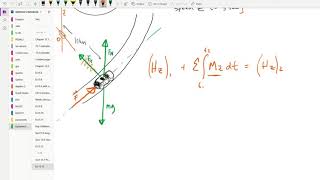
Example using normal and binormal directions to solve the angle of a banked turn.

EX 13.10 - Engineering Dynamics - Matt Pusko

EX 13.10 - Engineering Dynamics - Matt Pusko

Problem involving radial and traverse components (cylindrical)

EX 13.5 - Engineering Dynamics - Matt Pusko

EX 13.5 - Engineering Dynamics - Matt Pusko

Pulley problem involving NSL and absolute dependent motion.

Ex 16.13 - Engineering Dynamics - Matt Pusko

Ex 16.13 - Engineering Dynamics - Matt Pusko

Working of

Section 13.1: Forces and accelerations - Engineering Dynamics - Matt Pusko

Section 13.1: Forces and accelerations - Engineering Dynamics - Matt Pusko

Lecture on Kinetics.

Example 17.12 - Engineering Dynamics - Matt Pusko

Example 17.12 - Engineering Dynamics - Matt Pusko

Working of example 17.12.

EX 13.9 - Engineering Dynamics - Matt Pusko

EX 13.9 - Engineering Dynamics - Matt Pusko

Example in normal and tangential coordinates.

EX 14.9 - Engineering Dynamics - Matt Pusko

EX 14.9 - Engineering Dynamics - Matt Pusko

... we now have the speed ends up coming out to

Ex 13.4 - Engineering Dynamics - Matt Pusko

Ex 13.4 - Engineering Dynamics - Matt Pusko

Working or example 13.4. NOTE: although we got a constant value for acceleration, the acceleration will be different at every ...

Ex 12.18 - Engineering Dynamics - Matt Pusko

Ex 12.18 - Engineering Dynamics - Matt Pusko

Example of using cylindrical coordinates with parametric equations in r and theta.

Ex 13.2 - Engineering Dynamics - Matt Pusko

Ex 13.2 - Engineering Dynamics - Matt Pusko

Example 13.2 with and without drag as a force.

Section 13.2: Equation of Motion - Engineering Dynamics - Matt Pusko

Section 13.2: Equation of Motion - Engineering Dynamics - Matt Pusko

Lecture on the Equation of motion, F=ma.

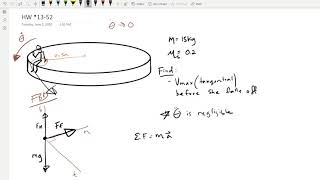
HW *13-52 - Engineering Dynamics - Matt Pusko

HW *13-52 - Engineering Dynamics - Matt Pusko

Example problem utilizing normal and binormal components.

Ex 15.13 Engineering Dynamics (ME242 at UNLV) - Matt Pusko

Ex 15.13 Engineering Dynamics (ME242 at UNLV) - Matt Pusko

Working of example 15.13.

13-6 | Kinetics of a Particle | Chapter 13: Hibbeler Dynamics  14th ed |  Engineers Academy

13-6 | Kinetics of a Particle | Chapter 13: Hibbeler Dynamics 14th ed | Engineers Academy

Like this Video and SUBSCRIBE

EX 14.6 - Engineering Dynamics - Matt Pusko

EX 14.6 - Engineering Dynamics - Matt Pusko

Pulley problem using principle of work and energy of a system.